venerdì 25 marzo 2016

giovedì 24 marzo 2016
CASTELVETRANO BLACK BREAD

POLLUTION & SOLUTIONS
The pollution of the planet is only an outward reflection of an inner psychic pollution: millions of unconsious individuals not taking responsibility for their inner space. We as humans are literally going to eliminate our own species by pollution, like we have done with hundreds of animals worldwide. We are choosing not to save our world. The situation will not improve unless we all do something positive to help. Change begins from small gestures. Here are four ways to save our earth. We can do all of them!

mercoledì 23 marzo 2016
POSTERS
Have a look at some posters created by our students!
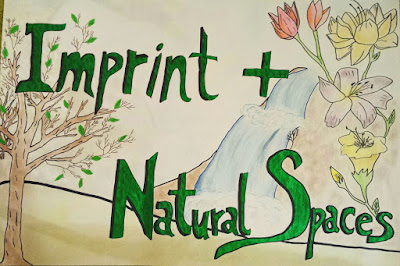 CLAUDIA CAIME
 DORIS DI NATALE
 GAIA BONO
 LUNA GABRIELE
 SERENA PRINZIVALLI


lunedì 21 marzo 2016
ARAB-NORMAN STYLE

The Arab-Norman style is incomparable and exclusive of Palermo, Cefalù and Monreale and is
characterized by the union of two opposite worlds: the Arab - Muslim and Norman
– and the Catholic. The Arab rule (from 827 to the end of the eleventh century)
made the city one of the richest and most important of the time: wonderful
palaces, mosques, minarets, gardens and fountains were erected. On July 3rd, the UNESCO World Heritage
Committee in Bonn
declared the Arab Norman itinerary a "World Heritage Site", then it
was inserted into the World Heritage List. This itinerary is composed of 9
monuments: the Royal Palace with the Palatine Chapel, the Church of San Giovanni
degli Eremiti and the Church of Santa Maria dell’Ammiraglio (known as the Church of
the Martorana), the Church of San Cataldo, Palermo Cathedral, Zisa Palace
and the Admiral bridge.

Royal Palace: it was built in the 10thcentury by the Norman kings who
chose it as house, but also as a residence of exceptional luxury and
sophistication.

Palatine Chapel: it is located on the first floor of the Norman Palace
and it was built during Roger's reign, as a chapel of the Royal Palace.
In 1132 it became a parish and it is dedicated to SS. Peter and Paul, in fact,
the right hand aisle is decorated with scenes from the life of St. Paul and the left one with episodes from
the life of St. Peter. In it we can see the aspiration of Norman kings to
restore the Christian cultural world, combining it with the Muslim world,
present in the magnificent decorations.

Cathedral: It is considered the "history book of Palermo", because
all the cultures that came one after the other over the centuries left their
impressions. The cathedral dates back to 1184.

Church of San Giovanni degli Eremiti:
it is one of the most famous medieval buildings in Palermo and one of the
symbolic monuments of the city. It was built during the Norman period, between
1130 and 1148, during the rule of Roger II and it was restored in 1882 by
Giuseppe Patricolo.

Church of Santa Maria dell’Ammiraglio (Martorana): The Church of Santa
Maria dell’Ammiraglio was built in 1143. In the fifteenth century was granted
to the convent of Benedictine nuns, founded in 1194 by Eloisa Martorana; since
then the church was called "Martorana".

Church of San Cataldo: It was built in 1154 during the reign of William I by order of
Majone from Bari.
It is the most distinctive example of the Arabic architectural culture of the
Norman sovereigns with their typical surrounding red domes that characterize
it.

Zisa Palace: The palace, that was built in 1167 (more or less), was the favourite
summer residence of the kings and their
court. Its name comes from the Arabic "beautiful”.

Admiral Bridge: It was built during
the XVIIth century by Giorgio D’Antiochia, king Ruggero’s admiral. The building
consists of two flights of stairs that lay on four smaller flat arches. At this
bridge, on May 27, 1860, at night
Garibaldi’s troops prevented Bourbon troops from invading the city.
domenica 20 marzo 2016
LOGO CONTEST
Here are
some of the best logos our students created a few weeks ago for the international logo contest that will
take place from March 17th to
April 15th. The winning
logo will identify our project , Natural Spaces, by underlining its importance
and main themes.
If you want
to vote, this is the link: http://2epal-evosmou.gr/


Spanish logo



Let the best win!
venerdì 18 marzo 2016
NOCELLARA DEL BELICE OLIVES

Nocellara del Belice olives, which are collected by
the end of September, are an Italian fruit and vegetable product.
The Belice Valley oil is an extra virgin olive oil with a protected
designation of origin (PDO).
The olive produces an oil with a pleasant scent and a particularly
intense and full-bodied taste.

The traditional cultivation of the vine allows the production of
excellent wines, both red and white, which are more and more known and
appreciated around the world.
In Sicily wine is made from the time of the Phoenicians and today Sicily
is the Italian region with the greatest extension of vineyards in
Italy. Most of the vineyards are in the province of Trapani. The first
protagonist is the ‘’Nero d’Avola’’ wine.

The pecorino is produced exclusively with raw whole sheep’s milk to
which is added the rennet in a wooden vat.
The production of sheep’s milk is typically Sicilian. It guarantees a
finished product that is unique and excellent. With sheep’s milk ,after
much work, you can also produce the sheep mozzarella, made only in
Sicily.
There are so many Sicilian cheeses , just like the ‘’pecorino DOP’’,
worked with traditional methods.

Among the flowering species the first to color the landscape are the
white clouds of almond trees and fragrant orange blossoms.
These are some wild flowers that can be found in Sicily.

Iscriviti a:
Post (Atom)